| Parmigiano-Reggiano |
 |
 |
 |
| Sizes |
 |
|
 |
 |
 |
| Aging |
 |
|
 |
| 24 month |
 |
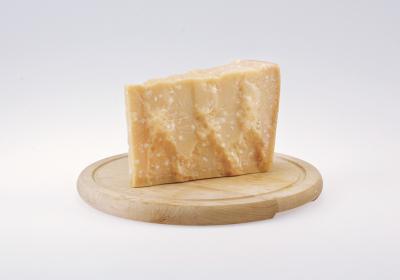
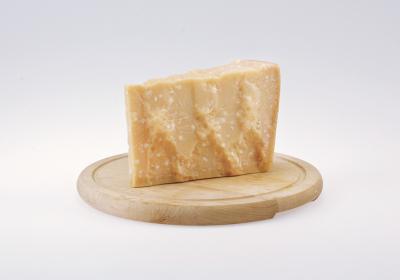
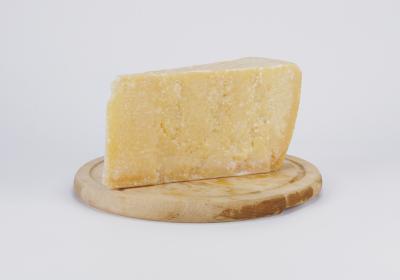
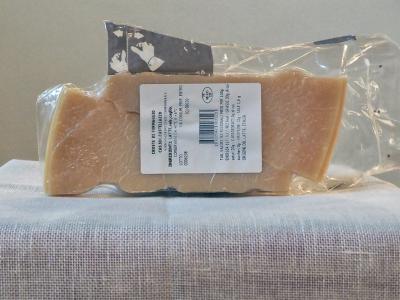
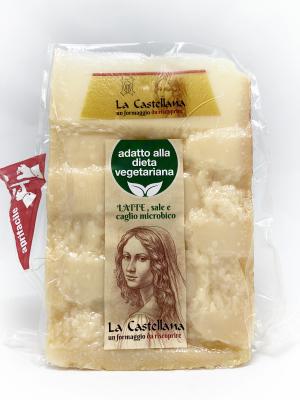
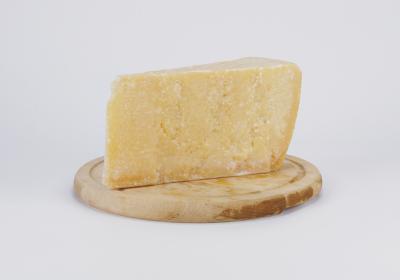
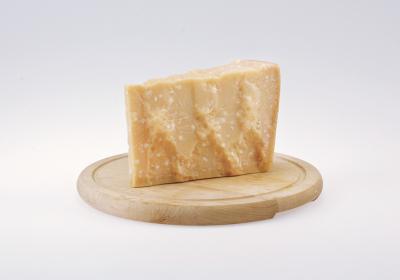
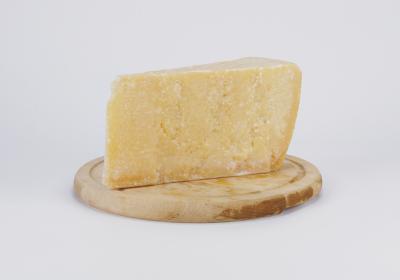
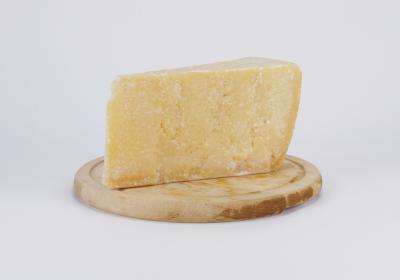
| Each wedge is aged for at least 24 months. During this time the natural milk ferments give to this cheese its typical taste and texture. The wheel of Parmigiano Reggiano from which the wedges are taken is cylindrical with a hard, dark yellow rind, its texture is granular, and its taste is fragrant and palatable. |
|
 |
|
|
|
 |
 |
|
 |
 |
 |
| Nutrition details |
 |
Semi-fat, cooked, hard cheese obtained from a slow aging process, produced with curd, with fermentation acidity of milk from dairy cows, namely animals in lactation, fed with forage coming from mixed permanent meadows and alfalfa crops.
The milk from morning and evening milking is used, it is then semi-skimmed by removing the cream that naturally rises to the top.
The use of fermentation inhibitors is forbidden. The next step is the salting process which is carried out for about 20 days.
The cheese is aged naturally for an optimal period of 24 month.
Aged cheese can be grated or eaten on its own. Aged Parmigiano Reggiano wheels feature the following characteristics:
• Cylinder shape, with slightly convex to straight sides, flat upper and lower faces slightly chamfered;
• Dimensions: diameter of upper and lower faces from 35 to 45 cm; side height between 20 and 26 cm;
• Average wheel weight: Kg. 35/40;
• External appearance: dark colour and oiled or natural gold-coloured rind;
• Colour: from pale straw-yellow to straw-yellow;
• Typical flavour and taste: fragrant, delicate, tasty yet not sharp;
• Texture: fine granules, breaks in brittles;
• Openness: minute, hardly visible;
• Rind thickness: approximately 6 mm.;
• Dry matter fat content: minimUM 32%.
• Production area: territories in the provinces of Parma, Reggio nell'Emilia, Modena, Bologna, areas to the left of the Reno river, Mantua, areas to the right of the Po river. |
|
 |
|